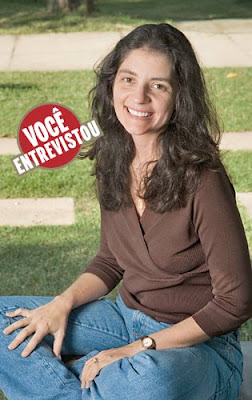
Palestra da Lacy Barca (blog Amiga Jane) no II EWCLiPo: Ciência na Televisão.


Kino,
Só usar a tag que tem nesta página:
http://googlesystem.blogspot.com/2006/07/embed-mp3-files-into-your-website.html
-----------
O endereço do áudio da Suzana Herculano é:
http://www.mypodcast.com/fsaudio/rmtakata_20091001_1754-507849.mp3


Cardoso @osamekinouchi só se inveja matasse ;) A idéia é boa mas foi MUITO em cima, infelizmente não dá pra viabilizar :(about 4 hours ago from Power Twitter in reply to osamekinouchi
Pois é, mas daí tive uma idéia. O Cardoso nos ensinou no II EWCLiPO a como monetizar os blogs, como ganhar dinheiro com eles. É claro que eu não vou botar AdSense no SEMCIÊNCIA, afinal não quero ganhar o prêmio Blog Cascão que o Science Blogs Brasil ganhou no II EWCLiPo pelos anúncios de Logosofia, juntamento com o Portal ABC - por contaminar com Malwares os visitantes...
Daí inventei um blog sobre Arraial do Cabo (pretendo voltar lá nas férias), um blog turístico que possa ser monetizado. Coloquei a Angélica como co-administradora (eu realmente não temho tempo para isso!), e pretendo convidar a Vanessa para ser a nossa reporter local, tirando fotos, fazendo roteiros de viagens, falando das pousadas, restaurantes, passeios da região. Vamos ver se funciona...
Afinal, se me orgulho de ser um cientista que tem idéias criativas, então devo ser capaz de gerar boas idéias para ganhar um dinheirinho extra, não é mesmo? Nasce assim o blog Arraial do Cabo, deêm uma olhada.
Hummmmmm... Lembrei de quando perguntaram ao Per Bak por que ele não era rico se era tão inteligente. Ele respondeu (estava vindo de uma conferência em Aspen):
"Eu posso não ser rico, mas viajo para os lugares que os ricos iriam se tivessem tempo..."

the physics arXiv blog |
The Evolution of Overconfidence Posted: 23 Sep 2009 09:11 PM PDT If overconfidence leads to global disasters such as the collapse of banks and world wars, how could it have evolved? Now researchers have an answer ![]() What do the following high-profile disasters have in common: World War I, Vietnam, the war in Iraq, the collapse of the banking system and the lack of preparation for natural disasters such as Hurricane Katrina? According to Dominic Johnson at the University of Edinburgh and his pal James Fowler at the University of California, San Diego, the answer is that they have all been blamed on the all-too-human condition of overconfidence. The puzzle about overconfidence is its ubiquity. Many studies have shown that most people have an exaggerated sense of their own capabilities, an illusion of control over events and an invulnerability to risk. Most people, for example, believe they are above average drivers, a statistical impossibility. We are all overconfident in one way or another. But how can such a condition have evolved when the consequences of overconfidence can lead to the destruction of communities and the catastrophic loss of life? That's a mystery that many experimental psychologists have wrestled with but now Johnson and Fowler say they have the answer. By creating a mathematical model of the way overconfident individuals compete against ordinary individuals, they show that there is a clear advantage in overconfidence. In fact, if the potential reward is at least twice as great as the cost of competing, then overconfidence is the best strategy. In fact, overconfidence is actually advantageous on average, because it boosts ambition, resolve, morale and persistence. In other words, overconfidence is the best way to maximise benefits over costs when risks are uncertain. That's an interesting insight. Experimental psychologists have long known of the role of overconfidence in conflict situations and yet have been unable to explain its origin. But it is Johnson and Fowler's predictions that are most worrying. Their model implies that optimal overconfidence increases with the magnitude of uncertainty. So the greater the risk, the more overconfident individuals should become. Johnson and Fowler use that finding to predict that overconfidence will be particularly prevalent in domains where the perceived value of a prize sufficiently exceeds the expected costs of competing. What might these be? They highlight several domains but perhaps the most obvious and potentially dangerous are international relations, where events are complex, distant, involve foreign cultures and languages, new technologies such as the internet bubble and the banking industry where complex financial instruments abound. Any of that sound familiar? All that sets the stage for the next question: how best to mitigate the worst side-effects of rampant overconfidence in a society that has a dramatically exaggerated sense of its own abilities Ref: arxiv.org/abs/0909.4043: The Evolution of Overconfidence |


Fig 1. - A Penny do Cardoso vai acabar ficando famosa...A campanha de Marina Silva estreou na internet em abril deste ano. A grande mídia ainda nem sequer especulava se a ex-ministra sairia ou não do PT de Lula rumo ao PV de Fernando Gabeira, e seus seguidores já pediam voto.


Quem já se inscreveu:
| Nome completo | Atividade | Instituição/Empresa | Blog | Confirmado |
| Adilson Jesus Aparecido de Oliveira | Profissional | Universidade Federal de São Carlos | www.pordentrodaciencia.blogspot.com | |
| Alessandra Maria Ruiz Galdo | Estudante | Universidade Federal de Santa Catarina | http://alegaldo.com | ok |
| Carla da Silva Almeida | Estudante | Universidade Federal do Rio de Janeiro | ok | |
| Carlos Vinicius Rodrigues dos Santos | Estudante | Astronomia | www.mundodaastronomia.blogspot.com | |
| Claudia Kuen Rae Chow | Profissional | xxx | http://scienceblogs.com.br/ecodesenvolvimento | ok |
| Davi Pedroni Barreto | Estudante | Universidade Federal de Juiz de Fora | www.bioconnection.blogspot.com | |
| Érica Masiero Nering | Estudante | Toque da Ciência | ciencia.inf.br | |
| Fernanda Poletto | Estudante | Universidade Federal do Rio Grande do Sul | htp://bala-magica.blogspot.com | |
| Frederico Augusto de Castro Furtado | Profissional | Instituto Ciência Hoje | ||
| Gabriel Cunha | Estudante | UNIFESP | http://scienceblogs.com.br/rnam | ok |
| Gustavo Miranda Forte | Estudante | USP | http://dfm.ffclrp.usp.br/ldc | ok |
| L. Felipe Benites | Estudante | Universidade do Vale do Rios dos Sinos | http://oamigodewigner.blogspot.com | |
| Lucas Ricardo Hypolito | Estudante | DFM USP | dfm.ffclrp.usp.br/ldc | ok |
| Luiz Bento | Estudante | UFRJ | scienceblogs.com.br/discutindoecologia | ok |
| Mara Figueira de Oliveira | Profissional | Instituto Ciência Hoje | ok | |
| Mariana Ferraz | Profissional | Instituto Ciência Hoje | ok | |
| Juliana Motta Kinouchi | Profissional | Colégio Metodista | ||
| Mauricio Camargo Trida | Profissional | ETESP | http://incautosdoontem.opsblog.org/ | |
| Nildson Alvares Muniz | Profissional | particular | porumnovoespiritohumanoecientificonos.blogspot.com | |
| Paula Signorini | Profissional | Rastro de Carbono | http://www.rastrodecarbono.com.br | ok |
| Rafael Bento da Silva Soares | Profissional | Scienceblogs / USP | RNAm | |
| Renan Picoreti | Estudante | Unicamp | http://www.scienceblogs.com.br/dimensional/ | ok |
| Ricardo Bittencourt | Profissional | www.ricbit.com | ||
| Roberto Gomes de Souza Berlinck | Profissional | Universidade de São Paulo | http://quiprona.wordpress.com | |
| Roberto Mitsuo Takata | Estudante | IB/USP | genereporter.blogspot.com | ok |
| Sandro Silva e Costa | Profissional | UFABC | www.dedalus-atlas.blogspot.com | |
| Tatiana Rodrigues Nahas | Profissional | Ciência na Mídia | http://ciencianamidia.wordpress.com/ | ok |
| Thaís Fernandes Santos Nave | Profissional | Instituto Ciência Hoje | ok | |
| Thiago de Souza Camelo | Profissional | Instituto Ciência Hoje | ok | |